Saturday, October 5, 2013

Detailed Overview of HEVC/H.265

Currently a real HEVC/H.265 usually outperforms AVC/H.264 above 30% at bit rate.

Shevach Riabtsev provided a great presentation about HEVC/H.265 in


In his presentation, he described HEVC/H.265 as follows

HEVC/H.265 Encoder

Shevach said "In addition to AVC/H.264, SAO and SAO Params Estimation added. 
SAO Params Est. can be executed right after deblocking or right after the reconstruction 
as shown in the figure.

HEVC similarity with AVC/H.264 allows quick upgrading of existing AVC/H.264 solutions
to HEVC ones."

Saturday, September 21, 2013

Aqueti GIGAPIXEL CAMERA

carolina-zoomin-2

Aqueti has developed a gigapixel camera which was funded by the U.S. government’s Defense Advanced Research Projects Agency (DARPA) for for surveillance purposes, like the drones. A 205-pound camera called the Aware2 consists of 98, 14-megapixel camera lenses, and is 30-inches square by 20-inches deep. Now it is available to public via the Kickstarter campaign.

This imaging system called as supercameras built from arrays of microcameras. Aqueti’s multiscale camera technology implements parallel processing on the microscale to build cameras that capture the field of view of thousands of conventional cameras with a cost and volume comparable to a single system.

Aqueti’s supercamera infrastructure includes

  • The MC2 microcamera,
  • Gigagon spherical objective lenses,
  • The Aware macrocamera architecture and
  • Zoomcast services.

These technologies incorporate technologies of mulitscale lense design, monocentric optics, focus and exposure control and image data management.

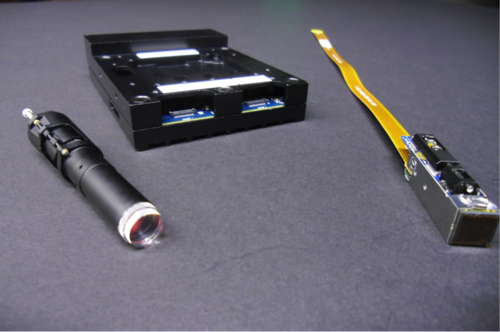
MC2 microcameras use 3D sensor chip integration to allow dense packing of many arrays. Microcamera optics incorporate new aberration control and ultracompact focus and control systems with specialty high performance electronic read-out systems.


microcamera.png
MC2 microcamera components

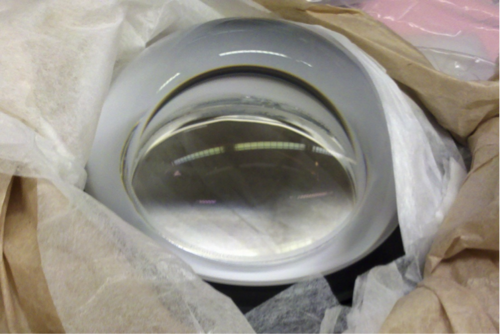
Gigagon lenses are multilayer spherical balls designed to reduce chromatic and spherical aberration while delivering large aperture images to spherical focal surfaces.


gigagon.png
Aware 10 gigagon lens

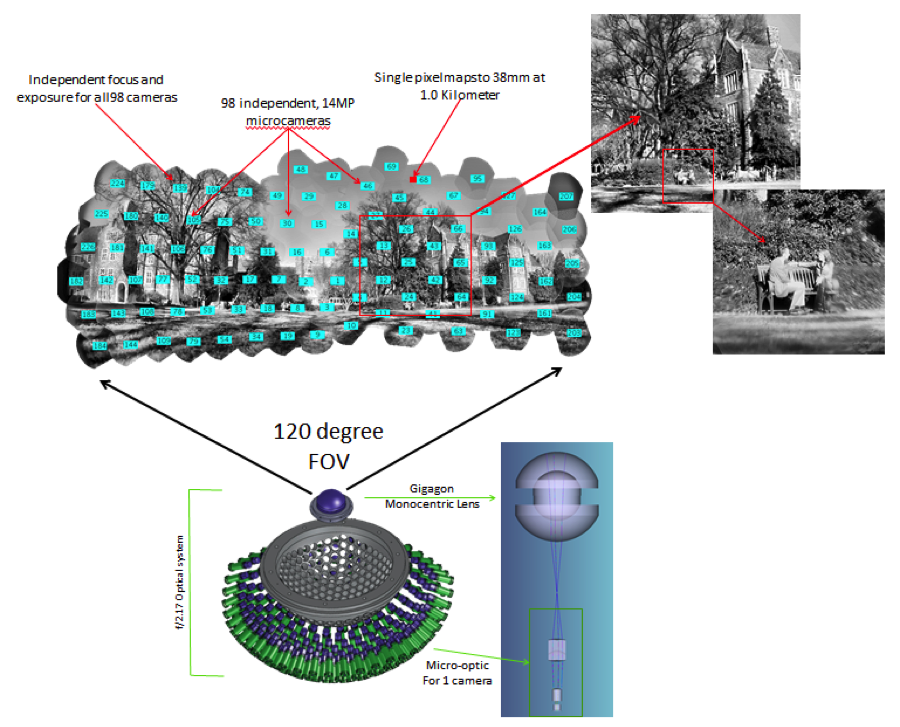
The Aware  macrocamera architecture, as illustrated below, overcomes this problem by integrating large arrays of microcameras on a spherical dome surrounding the gigagon lens. Each microcamera may be individually focused on objects within its narrow field of view. Typically, a microcamera observes only 2 degrees out of the 100 degree Aware field. 
AWAREarchitecture.png
Aware camera architecture

With Zoomcast services, Aqueti personnel arrive with the Aware2 camera, set it up on-site, and capture images that your guests can access online. Imagine offering attendees the ability to see the big picture – yet zoom in on intimate bouquets of themselves and their friends. The read-out datais performed via Microcamera clusters interface with “microcamera control modules” (MCCMs). Parallel MCCM communication and processing interfaces allow data streaming approaching 100 gigabytes per second. The proprietary gigapixel video data structures, Zoomcast technology, allow this data to be efficiently recorded, processed and communicated for diverse applications.

Friday, September 20, 2013

iPhone 5S's Dual Core A7 vs Quad-core Chips in Android Competitors

A7

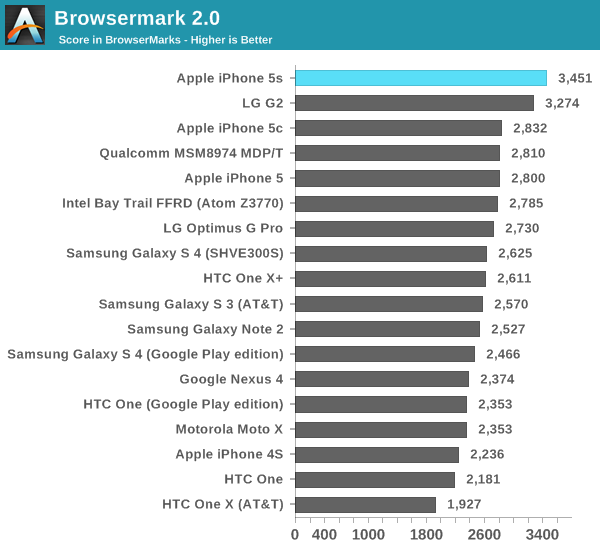
Samsung made iPhone 5s's A7 chip which is a 1.3GHz dual-core chip still beats latest Quad-core chips in all Android phones, such as Qualcomm’s latest quad-core Snapdragon 800 processor clocked at 2.3 GHz per core in LG G2, according to Anandtech. 

Browsermark 2.0
Possibly the 4 cores were not used very effectively.

Tuesday, September 17, 2013

Chrome Shockwave Crashes

Chrome's frequent slow downs and annoying crashes are related to Adobe Flash since Chrome attempts to utilize both the OS installation of Flash and the internal Chrome installation of Flash. It often behaves ”The following plug-in has crashed: Shockwave Flash."

To fix it, type chrome://plugins/ and disable Flash. Possibly also disable "Skype Click to Call" if it also cause slow downs or crashes.

Monday, September 16, 2013

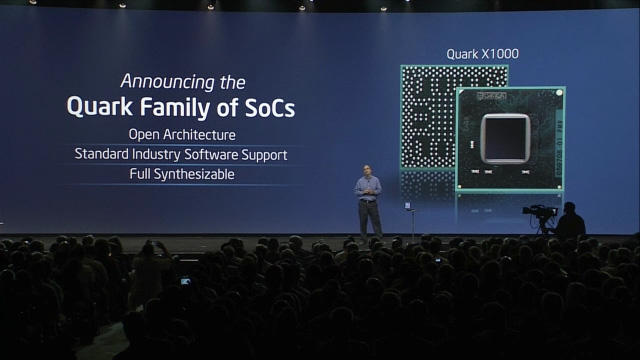
Intel Quark and Internet of Things


The world around us is becoming more connected every day, almost to a pervasive extent as microprocessors, bluetooth smart and WiFi integrate more than just consumer electronics into our online lives. Everything from the Nest thermostat to to WiFi enabled refrigerators contain SoCs, enabling us to access them remotely, or use them in ways that we never imagined before. Industrial use of these small, integrated chips is growing like crazy, too. The Internet of Things refers to uniquely identifiable objects and their virtual representations in an Internet-like structure.
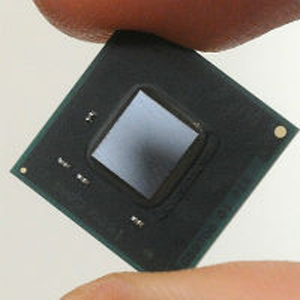

Since Intel has missed smartphone and mobile markets which were led by Qualcomm,  its Developer Conference in this week kicked off with the debut of Quark, a set of processors designed for use in wearable gadgets and industrial sensors. Intel claimed that Quark chips are not only one fifth the size of the smallest Atom processor, but also consume as little as one tenth the power. Furthermore, the product line is based on an open architecture that gives partners breathing room to tailor their offerings to specific markets, like what has been done by ARM.  ARM-licensees such as Qualcomm have already shown interest in the wearable market. Let's see whether Intel’s Quark SoCs will be able to capture a significant slice of this burgeoning market.

Thursday, September 5, 2013

See Settings and Enable ADB on Kindle Fire 2


Larger Front
  • On the Kindle Fire tablet, from the homepage, touch the time and drag it downwards, and go to Settings;
  • Under Security, set Enable ADB to On, and then click OK to dismiss the pop-up warning message;

Tuesday, July 9, 2013

Android Emulator sdcard Read-only to be Writable

For an Android emulator to make a writable sdcard, we need to use "SD Card Emulation".

To do it on a host computer where Eclipse ADT runs on

     mksdcard

For example:   

     mksdcard 1024M sdcard1.iso

then in Eclipse put the file path in Android Virtual Device Manager ->Edit ->SD Card->File. or
  
     emulator -sdcard

Followers

About Me

My photo
HD Multimedia Technology player